
One Year On
This time last year I was getting ready to go to my first race - the Formula 1 U.S. GP in Austin, Texas. In January, 2025, I’d been on LinkedIn and saw a photo of a McLaren Formula 1 car. I’d had friends tell me about F1 and how fun it was, but I didn’t want to pay to watch. But after that photo? Man, I wanted to do that. I loved how it captured the speed, the exhilaration, the racecraft of the driver and car, and the artistic skill of the photographer.
I had to wait two grueling months before Formula 1 was back, where I, of course, studied Drive to Survive and watched race highlights to catch up on what I’d missed out on seemingly my whole life. And then after two race weekends of watching just through highlights and streamers showing off the driver tracker, I bit the bullet and bought an F1 subscription and watched the Japanese GP live. That’s when I decided - I was going to go to a race, and I was going to take photos. From there, I watched race replays and got into sim racing.
Photography was something I’d been interested in growing up. I remember one year I got a tiny Nikon digital camera for Christmas, a blue and purple gradient one. I wasn’t particularly good, but it was fun. ( Of course, that was when I was 12 and at this point, I was 20. Spoiler alert, history repeated, and when I finally made it to the track, once again, I wasn’t good at it, but it was fun).
The Austin Grand Prix happened to fall over my birthday, so I convinced my dad to take me as a birthday + university graduation present. I didn’t have a camera I could bring with me - the only one I’d used up until that point was for work and I hadn’t been able to play around with settings beyond what I needed for candid photos and headshots. Plus, I wasn’t going to bring my expensive work camera to a race track I’d never been to for an event I had nothing to compare to. So, all I brought was my phone. I did a ton of research leading up to the race about how I could get motion blur effects on my iPhone. I got nothing close to what I had seen almost a year earlier with a McLaren F1 car, but I did get some okay photos. Adding more blur after taking the photo was really bizarre though and I think it made the photos look a little less good, especially with fencing.
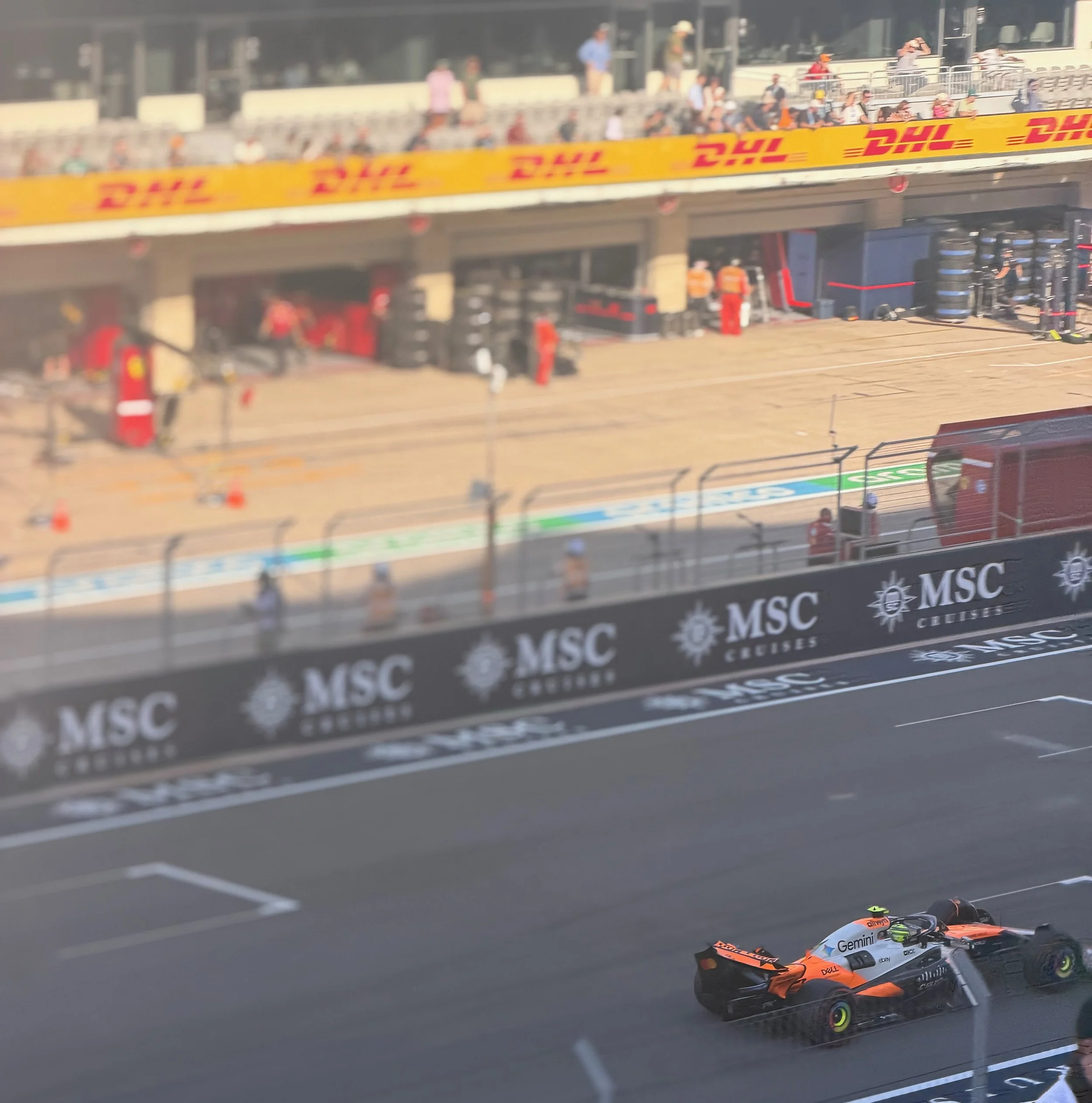
Being at the race was such a cool experience. From there, I knew I wanted to take more pictures like this, get better, and use real camera gear. My new goal: become an accredited F1 photographer.
Being from Idaho, when I got home at the end of October, our racing season was over. So I waited a few months for drag racing and my local NASCAR short track to start back up, and saved up for a camera and some good lenses, and practiced the techniques I knew I would need to improve on, on my dogs. I also went to some local car shows to get some static car shots. I figured that if I wanted to be good at photographing moving cars, I needed to know how to photograph still ones, as well.
(Historically, my dogs have always been my greatest photography subjects. My 1 year old golden retriever is especially fun to take photos of, because she’ll pose for me).
Finally, in March 2026, I got to go to a drag strip with my camera. It was a cloudy day, so I actually got some okay pictures. A lot of the day was spent trying to figure out how to effectively get that motion blur effect and not greatly overexpose my photos. Usually when I was taking photos up to this point, I would just adjust my settings to not be over exposed. But I very quickly realized that working with incredibly fast moving subjects, that wasn’t going to work. I had a CPL filter, to remove the glare from the still car photos I’d been taking, but it didn’t reduce the ambient light enough for it to be effective at panning. So, I purchased a variable ND+CPL filter. Next time at the drag strip a week later, the photos turned out much better.
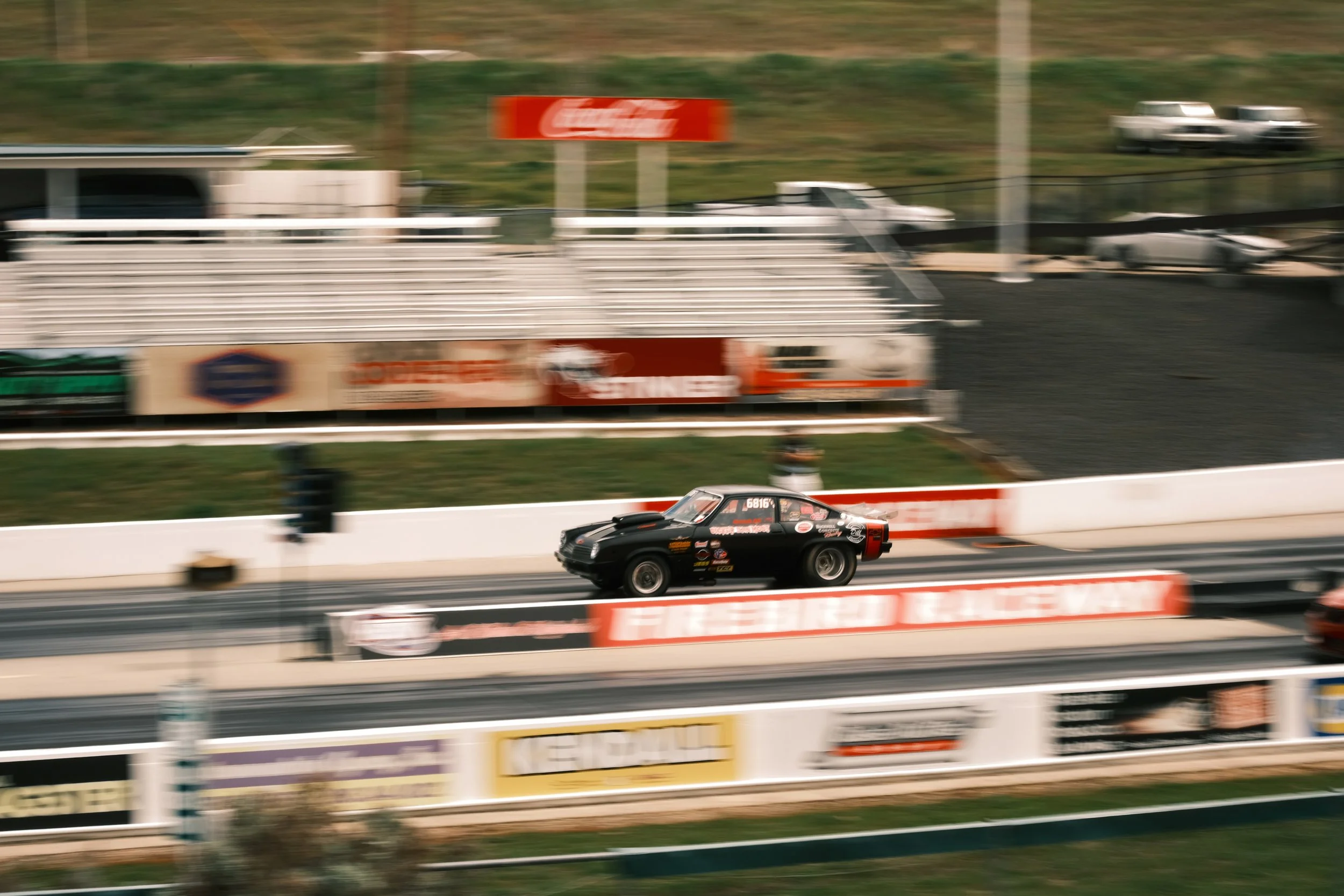
Here are some things that I learned really quickly that would’ve been helpful to know earlier:
I shoot on Fujifilm because I wanted to edit the least in post production. This means - I don’t need to shoot in RAW. Depending on the model and how you set up your film simulation, you can shoot pure JPEG and be fine. This makes for smaller files and doesn’t sacrifice color control. Fujifilm does have the option to shoot JPEG + RAW, which I did for a while before I realized it was just clogging up my phone storage. Sure, I could have exported everything into JPEGs and reuploaded, but that just created more work after taking the photos. So, shooting pure JPEG works best for me.
Sidenote - a lot of people say that the autofocus isn’t good enough for motorsport photography, but I think at the very least it’s a good camera to begin with. Personally, shooting at drag races, a quarter-mile oval, and at IMSA races, I didn’t have any issues with autofocus. But, since I was (and still am) learning, it’s possible I just haven’t outgrown the Fujifilm autofocus yet.
Variable ND+CPL filters are typically for videography, but I think they work well for motorsport photography. I could probably have gotten away with just using a variable ND filter - especially in changing conditions - but having the CPL side was nice when I was taking up close photos of cars.
The lens is arguably more important than the camera itself. A good camera is nice to have, but a good lens will provide stabilization, a lower f-stop, and slightly quicker and definitely quieter autofocus.
After I took photos locally for a month or two, I was ready to go to Laguna Seca for the IMSA race. It’s said that IMSA races are the best races for photographers to attend - and I full-heartedly agree. They’re very affordable and give a ton of access to spectators. If I could, I would attend all of the races during the year. After looking into what it took to get both an F1 and an IMSA media pass to take photos - I realized I still had a very, very long way to go. So, I added a goal that I needed to achieve before I could get F1 credentials - get media credentials at an IMSA race.
The amazing thing about IMSA races, is depending on where you position yourself around the track, you can get some angles that are just as good as what someone with credentials could get. There are definitely places you can’t photograph as well, like across from the pitlane or in a live pitlane, but as long as you’re willing to walk around and reorient yourself, you can still get some amazing photos. I took over 6,000 photos over the weekend at Laguna Seca, and kept probably more than I should’ve, ~4,000. A lot of them I’m hanging onto because “I’ll edit them eventually.” Will I? I’ve used some of them in my graphic design work that I didn’t edit immediately after the race, so it’s possible.
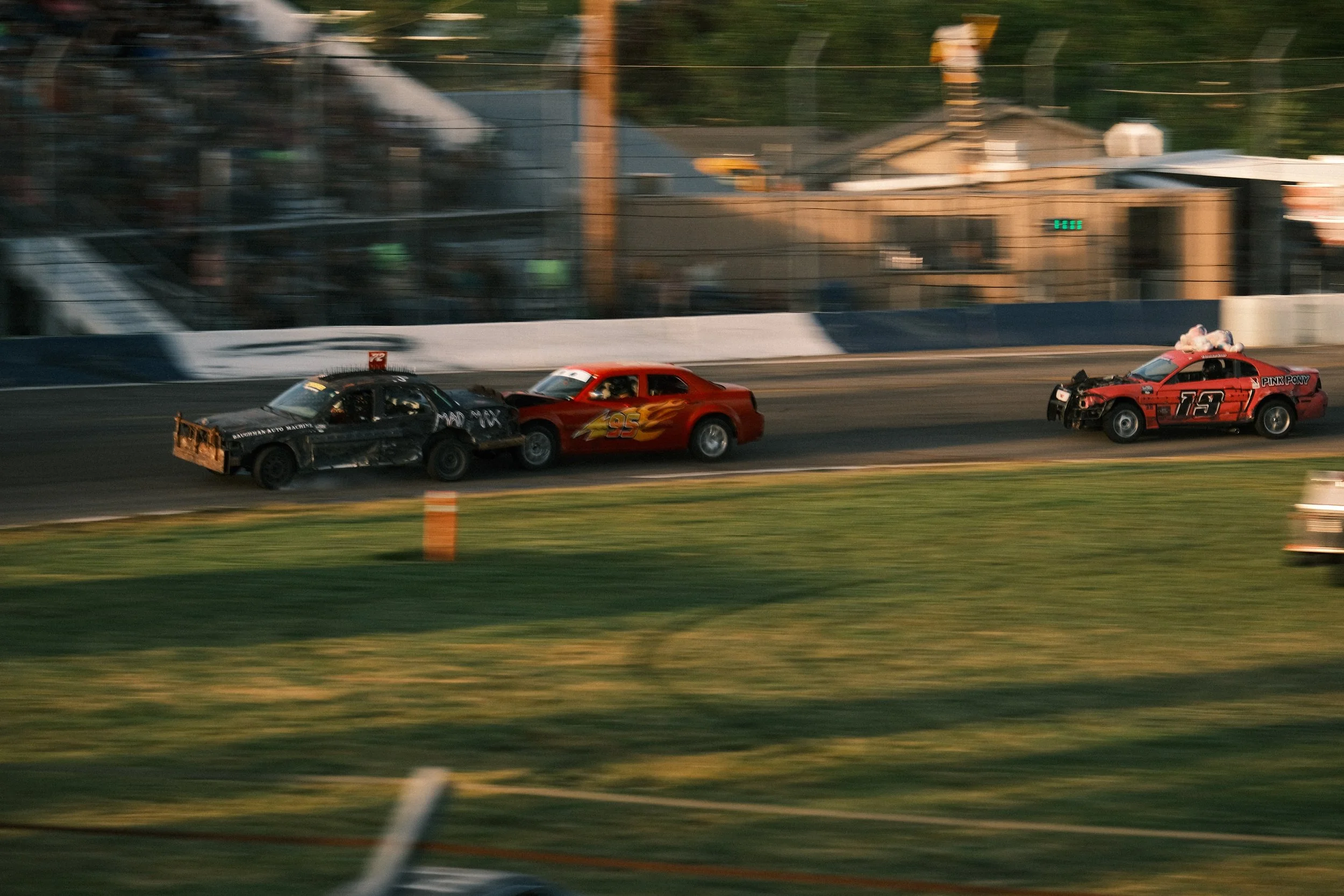
After Laguna Seca, I returned to my local oval track and got back to work. I had taken some very good photos, I think. But, there were probably 5 “very good photos” out of all 6,000 I’d taken. I needed to get that number to be a little more even. More good photos per shoot. The short track was just the place to work on that. Because the track was small, I had a view of the entire field at a given moment. And because it was local, there were some crazy races to watch and photograph - that required me to whip my camera to the other side of the track in an instant to watch Lightning McQueen spin out the Mad Max car.
A few more months at the local track, and I headed up to Wisconsin for the IMSA race at Road America in August. This time, I took much more than 6,000 photos, but I kept much less photos. I only kept about 2,700 - and while not all of them are great, most of them are good! My great-to-trash photo ratio definitely improved. At Road America I also got to photograph in the rain for the first time, which was very cool.
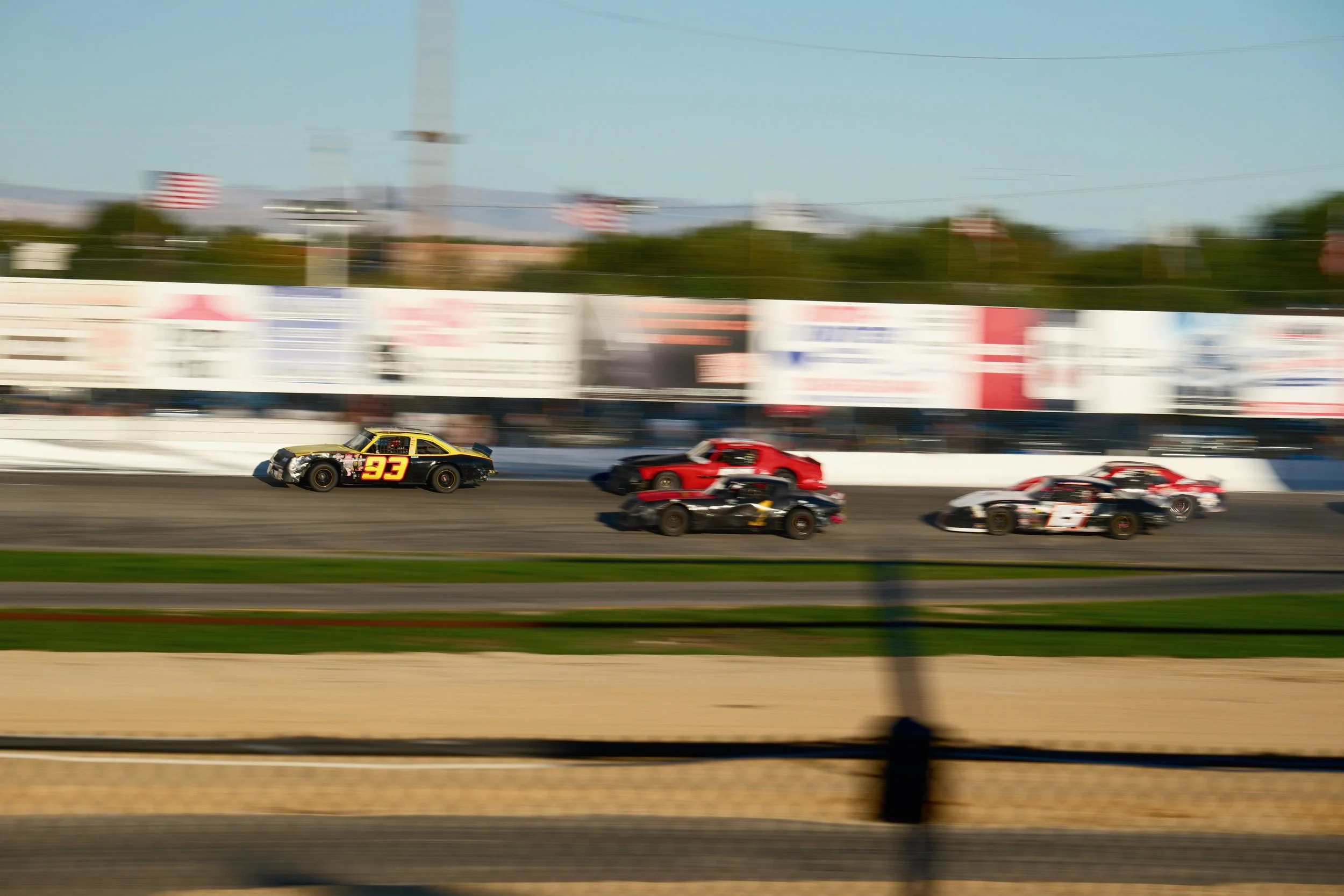
August and September left me with more time at the oval track, where I feel like I finally got my film simulation in a great place, and got some of my best photos so far.
In a couple of weeks, I’ll head back to Austin for the U.S. Grand Prix. It’ll be my last race of the year. This time, I’ll be bringing my Fujifilm camera, and hopefully I end up with better photos than last year. No IMSA credentials for me yet, but I’ll be applying for some at the races I’m attending next year. Until then, I’ll just be building my portfolio.
